
Case Study
Agentis: Strategic AI Orchestration
Unifying Data, Models, and Agents into enterprise AI strategy
The orchestration layer that answers: how do we make AI work at enterprise scale? Agentis connects AIthena's data fabric with Navari's agentic capabilities and domain-specific models into a coherent ecosystem.
!The Fragmentation Problem
Enterprise AI deployments were fragmented. Data teams built pipelines. ML teams trained models. Engineering built products. Each operated in silos, creating disconnected capabilities that couldn't leverage each other.
- AI capabilities scattered across disconnected teams and tools
- No coherent strategy for how data, models, and agents work together
- Scientists navigating multiple systems for each research question
- Duplication of effort and missed opportunities for synergy
Three Pillars Unified
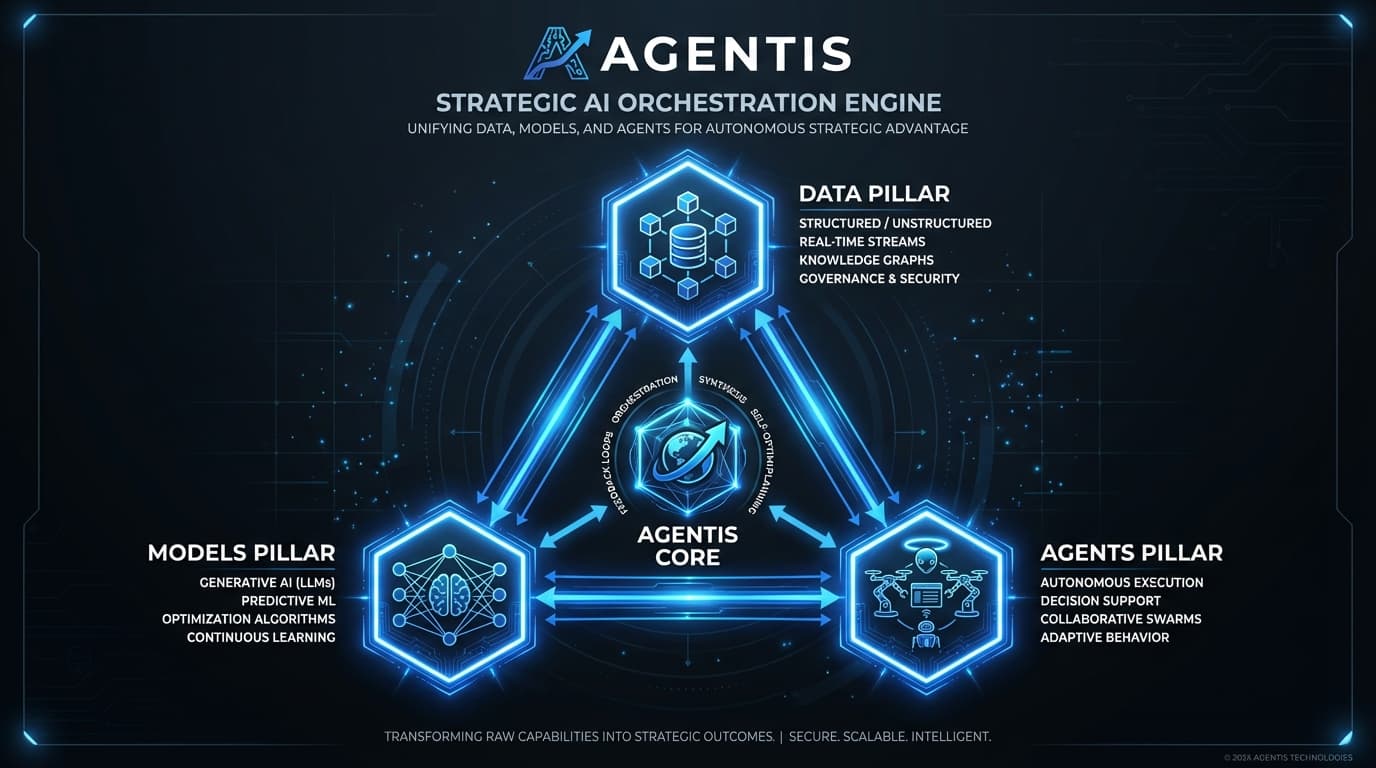
Agentis defines how the three pillars of enterprise AI—Data, Models, and Agents—connect and reinforce each other. It's not a product; it's the architecture that makes the ecosystem coherent.
- Data pillar (AIthena): FAIR-compliant data fabric with tens of thousands of patients
- Models pillar: Domain-specific foundation models fine-tuned for oncology
- Agents pillar (Navari): Task-specific agents with MCP-based tool execution
- Orchestration: Intelligent routing of questions to the right combination of capabilities
Architecture
Agentis provides the connective tissue between capabilities. When a scientist asks a question, the system determines what data is needed, what analysis to run, and how to present actionable results.
Timeline
Key Lessons
Strategy without systems is just PowerPoint; systems without strategy is just chaos
The orchestration layer is what transforms tools into a platform
Enterprise AI requires thinking in ecosystems, not point solutions
The hardest problem isn't building capabilities—it's connecting them coherently